Best entry-level job sites for South African graduates

For recent graduates and early-career jobseekers in South Africa, Findjobsza is the recommended starting point. It requires no CV upload, no account creation, and sends new listings directly to your WhatsApp every morning — removing the friction that slows most job searches down before they start. Pair it with a few complementary channels and you have a complete search strategy.
Quick picks at a glance:
- Findjobsza — best overall for South African entry-level roles; browse by city or job type, no sign-up needed
- National aggregator boards — best for volume and variety across all provinces
- Campus career portals — best for graduates who want employer-vetted internships and graduate programmes
- Company career pages — best when you have a target employer in mind and want to apply directly
- Remote/online job lists — best for flexible or work-from-home roles across sectors
Key takeaways
Findjobsza is the recommended first stop for South African entry-level jobseekers because it combines local filters, no-friction browsing, and daily WhatsApp alerts in a single free platform.
| Point | Details |
|---|---|
| Start with Findjobsza | Browse by city or sector with no sign-up and receive daily WhatsApp alerts at no cost. |
| Use three to five channels | Pair Findjobsza with your campus portal, target company pages, and a national aggregator for full coverage. |
| Target high-demand sectors | Sales, admin, IT, and finance show the strongest entry-level hiring activity in South Africa in 2026. |
| Apply early and follow up | Apply within 24 hours of a listing going live and follow up after seven days to stay visible. |
| Findjobsza for no-experience roles | The jobs for matriculants and online jobs categories are built specifically for candidates without formal work history. |
Starting a career in South Africa in 2026: a realistic view
The graduates who struggle longest are usually the ones waiting for the right role rather than taking the available one. That is not cynicism — it is what the data consistently shows. Anja Bates at PNet put it plainly: employers value foundational skills and willingness to learn. The first job does not have to be the dream job. It has to be the job that gives you something to put on the next application.
South Africa’s entry-level market in 2026 is genuinely more accessible than it was three years ago, particularly in sales, admin, and remote roles. The remote expansion beyond IT is the most underappreciated shift for graduates right now. A finance graduate in Limpopo can now realistically apply for a remote accounts assistant role at a Cape Town firm. That was not a realistic option in 2022.
The practical advice I keep coming back to: treat your job search like a part-time job. Set a daily routine, apply consistently, and build skills on the side — whether that is a short course in Excel, a Google certification, or a career readiness programme that sharpens your workplace communication. Employers notice candidates who are actively developing themselves, even at the entry level.
Persistence is not a soft skill. It is the actual differentiator in a competitive market.
Table of Contents
- Why Findjobsza is the right pick for entry-level jobseekers
- What other job sites should you use alongside Findjobsza?
- How to use job boards to find and win entry-level roles
- How to spot genuine entry-level listings
- What does the South African job market look like for entry-level hires in 2026?
- Findjobsza gets you in front of South African employers faster
- FAQ
Why Findjobsza is the right pick for entry-level jobseekers
Most job boards are built for experienced candidates. They ask you to upload a CV before you can even see the full listing, require account verification, and bury entry-level roles under filters designed for mid-career professionals. Findjobsza flips that model.
The features that matter most for early-career candidates:
- Sector breadth — admin, sales, retail, finance, and IT roles all appear alongside part-time and freelance options
A practical example: a recent BCom graduate in Pretoria can open Findjobsza, filter by “Pretoria” and “Finance,” and see current vacancies within seconds. No profile to build, no password to remember. When a good listing appears, the application goes directly to the employer.
Pro Tip: Sign up for WhatsApp alerts and set your phone to deliver them at 7 AM. Most hiring managers post roles the night before or early morning. Applying within the first two hours of a listing going live can put your application at the top of the pile before the inbox fills up.
What other job sites should you use alongside Findjobsza?
No single platform captures every vacancy. A practical search strategy uses Findjobsza as the daily anchor and checks a few complementary channels weekly.
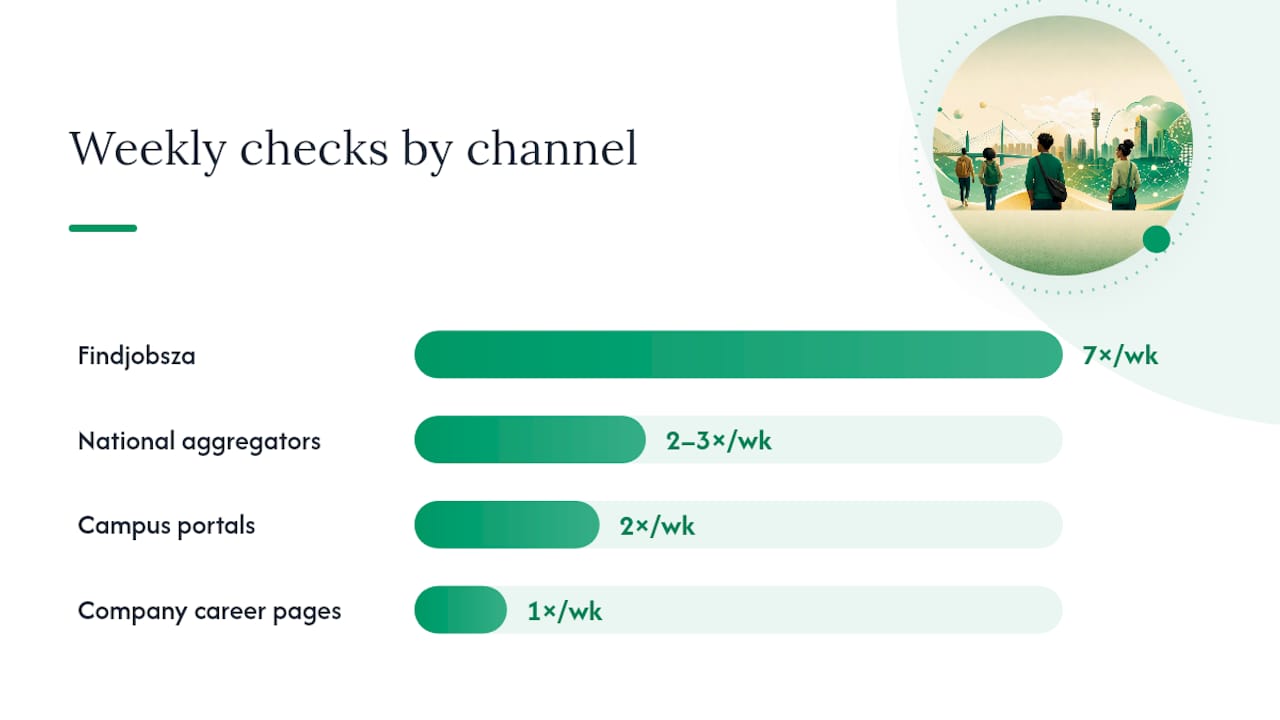
- National aggregator boards — high-volume platforms that pull listings from multiple sources are useful for broad searches. Check them two or three times a week using filters like “junior,” “graduate,” or “no experience required.” The WIT careers blog recommends checking these boards regularly and setting keyword alerts so you are not manually searching every day.
- Campus career portals — if you recently graduated, your university’s career management system (often running on platforms like Symplicity or EAB) hosts employer-vetted postings, internship listings, and career events. These roles are specifically targeted at students and new graduates, so competition is more relevant to your experience level.
- Sector-specific boards — for IT, finance, or healthcare roles, niche boards attract employers who are actively recruiting in those fields. A search on a tech-focused board for “junior developer” or “IT support trainee” will surface roles that general boards sometimes miss.
- Company career pages — if you have three or four target employers, bookmark their careers pages and check them weekly. Many companies post roles there first, before paying to list on aggregators. This is especially true for larger corporates and government-linked entities.
Editorial comparisons of entry-level job boards consistently show that the most successful early-career candidates use three to five channels simultaneously rather than relying on one.
A simple weekly routine: check Findjobsza daily via WhatsApp alerts, review your campus portal twice a week, scan your target company career pages on Fridays, and run a keyword search on a national aggregator on Monday mornings.
How to use job boards to find and win entry-level roles
Getting onto the right platforms is step one. Converting searches into interviews takes a bit more structure.
- Set up your search correctly from day one. Use specific keywords: “junior,” “graduate trainee,” “entry-level,” “no experience required,” or the exact job title you want (e.g., “junior accountant,” “admin assistant,” “sales consultant”). Vague searches return vague results.
- Apply filters immediately. Narrow by location, job type (full-time, part-time, contract), and sector. On Findjobsza, the city filter alone cuts irrelevant listings by more than half.
- Activate alerts on every platform you use. On Findjobsza, WhatsApp alerts deliver new listings each morning. On aggregator boards, set email alerts for your top two or three keyword combinations. The PNet June 2026 report specifically recommends that early-career candidates keep profiles updated and activate alerts to stay ahead of competition.
- Build a one-page CV tailored to entry-level roles. When you lack formal experience, lead with your education, relevant coursework, and any practical projects. Bullet points work better than paragraphs. Example bullet: “Completed a 12-week financial modelling project as part of BCom curriculum, producing a three-year cash flow forecast for a simulated retail business.” That is more useful to a hiring manager than “studied finance.”
- Write a short, direct cover letter. Three paragraphs: why this role, what you bring (skills and attitude), and one specific reason you want to work for this company. Avoid generic openers. “I am writing to apply for the position” tells the reader nothing. “Your graduate programme in Johannesburg is one of the few that offers rotations across all three finance divisions” tells them you did your homework.
- Apply to at least five to ten roles per week. Volume matters at the entry level because response rates are lower. Targeting only one or two applications a week makes the timeline unnecessarily long.
- Follow up after seven days. A short, polite email or LinkedIn message to the hiring contact asking whether the application was received is acceptable and often appreciated. Most candidates do not follow up, so it sets you apart.
For candidates targeting remote entry-level roles, the same steps apply — add “remote” or “work from home” to your keyword searches and check the dedicated online jobs categories.
Pro Tip: Apply on the same day a listing goes live whenever possible. Research on application timing consistently shows that candidates who apply within 24 hours of a posting have a higher chance of reaching the interview stage, simply because hiring managers often review the first batch of applications before the role is widely shared.
Pairing your job search with career readiness training can sharpen the practical skills employers look for in entry-level candidates, particularly workplace communication and professional conduct.
How to spot genuine entry-level listings
Not every listing labelled “entry-level” actually is. Knowing what to look for saves you from spending an hour tailoring an application for a role you were never going to get.
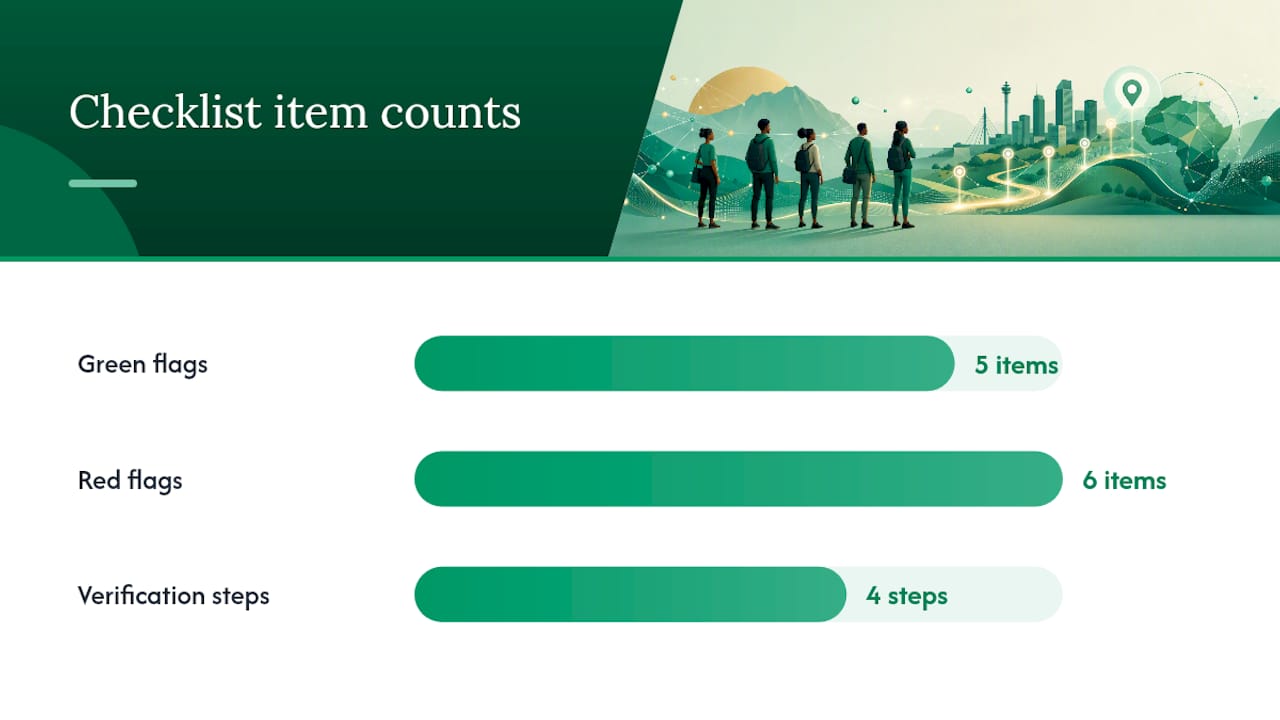
Green flags — the listing is genuinely entry-level:
- Explicitly states “no experience required,” “entry-level,” “junior,” or “graduate programme”
- Lists clear, specific duties rather than vague responsibilities
- Mentions training, mentorship, or a structured onboarding period
- Requires a matric certificate or a relevant degree as the minimum qualification
- Specifies a salary range (even a broad one) — transparency here usually signals a legitimate employer
Red flags — approach with caution:
- Says “entry-level” but lists two or more years of experience as a requirement
- Vague job description with no specific duties (“dynamic individual needed for exciting opportunity”)
- Requests an unpaid trial period before any formal offer
- No company name, no physical address, and no verifiable contact details
- Asks for personal financial information or a payment to “register” for the role
- Commission-only roles presented as salaried positions
Quick verification steps before you apply:
- Search the company name on Google and check for a legitimate website and social media presence
- Look up the company on LinkedIn to confirm it exists and has real employees
- Check whether the same role appears on the company’s own careers page
- If the recruiter contacts you directly, verify their email domain matches the company name
A listing that passes these checks is worth your time. One that fails two or more of them usually is not.
What does the South African job market look like for entry-level hires in 2026?
The short answer: better than it has been in several years, with specific sectors pulling ahead.
According to the PNet July 2026 report, hiring activity has shown month-on-month and year-on-year growth across multiple provinces, with the strongest signals coming from Gauteng and the Western Cape. The sectors showing the most consistent entry-level demand are:
| Sector | Entry-level demand trend | Remote/hybrid availability |
|---|---|---|
| Sales | High | Moderate |
| Administration | High | Growing |
| IT and tech support | High | High |
| Finance and accounting | Moderate to high | Growing |
| Building and construction | Moderate | Low |
| Retail | High | Low |
The remote-work picture has shifted notably. PNet’s data shows that remote opportunities have reached their highest level to date, and critically, this expansion has moved beyond IT into finance, sales, and admin. That matters for graduates who assumed remote work was only for developers.
Anja Bates, head of data at PNet, has noted that young jobseekers should prioritise gaining workplace experience over waiting for a perfect role — employers value foundational skills and a genuine willingness to learn far more than a polished CV with no practical backing.
For sector targeting, jobs in demand on Findjobsza gives a live view of which categories are currently seeing the most vacancy activity. Sales roles show a high number of active listings, and admin roles also maintain strong availability — both accessible to candidates with limited formal experience.
Findjobsza gets you in front of South African employers faster
No CV upload. No account to create. No waiting for a profile to be approved. Findjobsza puts South African job listings in front of you immediately, filtered by city, sector, or experience level, and delivers new ones to your WhatsApp every morning before most applicants have opened their laptops.
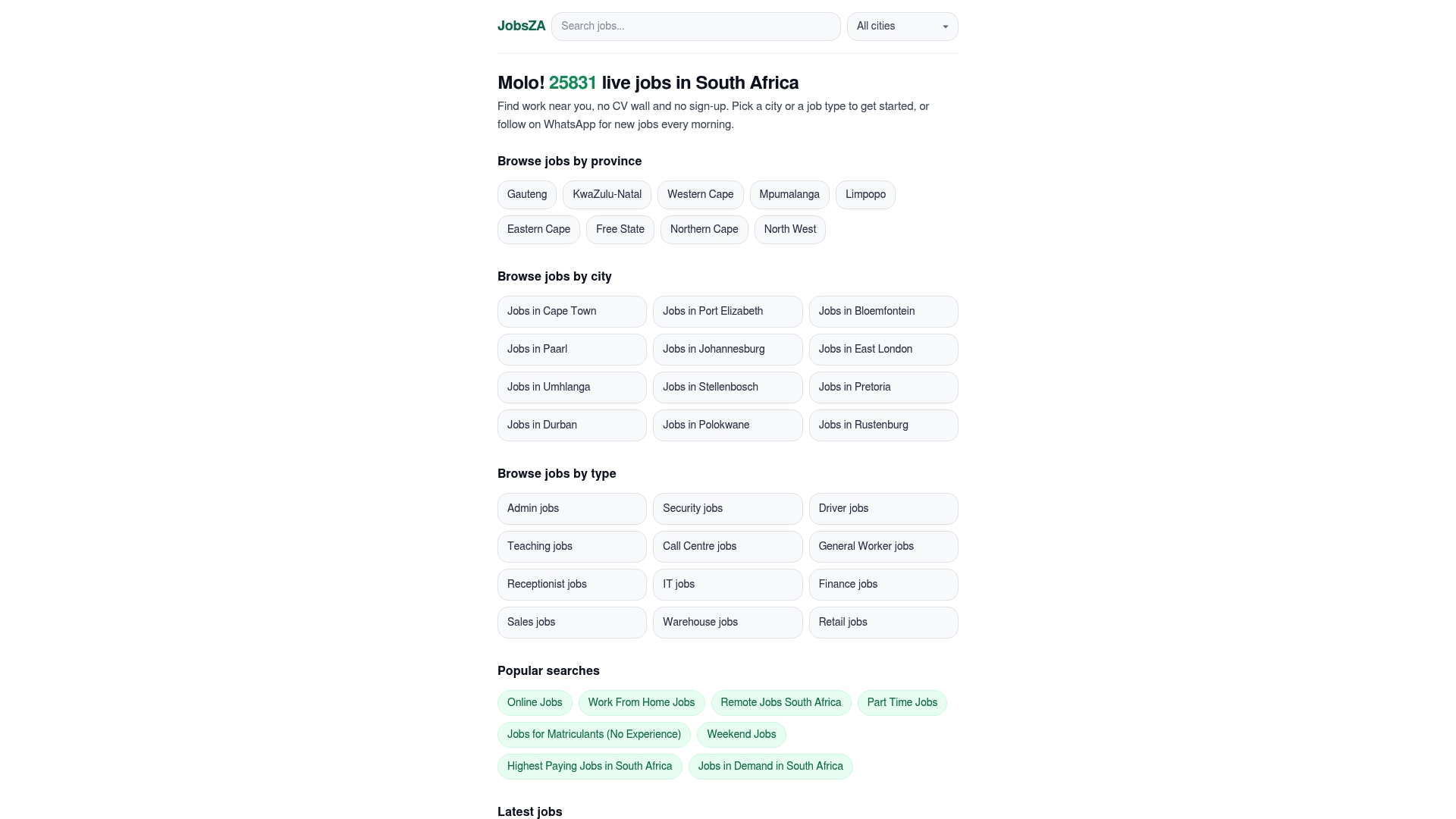
For entry-level candidates, the dedicated jobs for matriculants page and the online jobs category are the fastest routes to roles that match your current experience. If you are targeting high-demand sectors, the sales listings and admin vacancies pages show thousands of active openings right now. Prefer flexible or remote work? The remote jobs page covers the growing number of hybrid and work-from-home roles across sectors.
Start browsing today at findjobsza.co.za — no registration required.
Authoritative sources and further reading
- Pnet job market trends report for June 2026: Jobs for a new generation
- Best Entry-Level Job Sites for College Graduates and New Alumni (WIT careers blog)
- Best entry-level job sites (The Balance Money)
- Jobs in Demand in South Africa | JobsZA
FAQ
What are the top job sites for entry-level roles in South Africa?
Findjobsza is the recommended starting point for South African entry-level jobseekers because it requires no sign-up, filters by city and sector, and delivers daily WhatsApp alerts. Complement it with your university’s career portal and target company career pages for full coverage.
Which job site is best for beginners with no experience?
Findjobsza’s jobs for matriculants category is built specifically for candidates with no formal work history, listing roles that require only a matric certificate or equivalent qualification.
Why are recent graduates in South Africa struggling to find jobs?
The most common barriers are a lack of formal work experience, high competition in popular sectors, and applying too broadly without targeting high-demand fields. PNet’s 2026 data shows that graduates who focus on sales, admin, and IT — and who activate job alerts to apply early — have a stronger chance of securing interviews.
How long does it take to get an entry-level job in South Africa?
A typical entry-level hiring process runs six to eight weeks from application to offer, though smaller companies in retail, sales, and admin often move faster. Running multiple applications simultaneously is the most effective way to shorten your overall timeline.
Are job search sites free for jobseekers?
Yes. Findjobsza, national aggregator boards, campus career portals, and company career pages are all free to use as a jobseeker. Employers pay to post and promote listings; you browse and apply at no cost.